Abu Simbel Temples are a UNESCO world heritage site that has captivated visitors from all around the world.
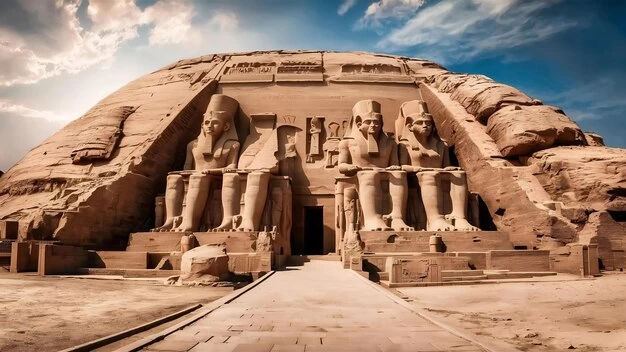
The Abu Simbel Temples are considered some of the most iconic and impressive monuments in Egypt. They are located about 190 miles south of Aswan, close to the Sudanese border.
History and Construction
Ramses II (Ramses the Great) built the temples around 1260 BC, and construction spanned nearly 26 years. The temples were carved directly into the cliff face, demonstrating the incredible engineering, architecture, and artistic power of ancient Egyptian civilization.
The Great Temple of Abu Simbel is dedicated to four gods: Amun, Ra-Horakhty, Ptah, and Ramses II (elevated to a divine figure). The interior of the temple is exquisitely decorated with scenes showing Ramses’ victories in battle and demonstrating his strength, bravery and piety. One mural depicts the Battle of Kadesh, which resulted in the Egyptian-Hittite peace treaty - the world’s second-oldest recorded peace treaty.
Next to the Great Temple is the Small Temple, which is dedicated to the goddess Hathor and Queen Nefertari, the wife of Ramses II. Very few temples honor a queen at the same level as a king, and the Small Temple demonstrates the depth of the love and respect Ramses II had for his beloved Queen.
The famous colossal statues of Ramses the Great stand in front of Abu Simbel. Each statue is more than 60 feet (20 meters) high. Like the temple, the statues are carved directly from the mountain face - an awe-inspiring feat of craftsmanship.
Saving the Monuments
The Aswan High Dam was built between 1960 and 1970 to control flooding, irrigation, and generate hydroelectricity from the Nile. Abu Simbel, laying upstream of the High Dam, was in the flood plain of the new reservoir and at risk of disappearing. With the efforts of a multinational team of architects and engineers, the entire temple was carefully cut apart, transported and reconstructed on higher ground. The new location of Abu Simbel included a manmade mountain to support the temples, and is specifically aligned to maintain the solar alignment phenomenon that occurs twice a year.
Solar Alignment Phenomenon
Abu Simbel is world-renowned for its solar alignment phenomenon, which occurs twice a year on February 22nd and October 22nd. On these two days, the rising sun enters the sanctuary at the back of the Great Temple and illuminates the faces of Amun, Ra-Horakhty, and Ramses II. Ptah - the god of darkness - remains in shadow. This astronomical precision makes Abu Simbel one of the most extraordinary temples ever constructed.
Visiting Abu Simbel
Visitors can reach Abu Simbel by bus (a 3.5 hour drive from Aswan), or a short flight. For travelers staying overnight, there is a nightly Sound and Light show, widely considered one of the best light shows in Egypt. The show tells the story of Ramses II and Abu Simbel Temples, including exquisite projections that bring the history of the site to life.
Why Abu Simbel is a Must-See:
- One of the top attractions in Egypt
- Visit a masterpiece of ancient engineering
- See a UNESCO World Heritage Site
- Home to Egypt’s most famous colossal statues
- Features one of the world’s most precise solar alignments
Visiting Abu Simbel is an unforgettable experience for visitors, with its magnificent architecture and fascinating history.



.svg)