-webp.webp)
The Valley of the Kings is one of the most important archaeological sites in Egypt and is often considered the second most significant historical destination after the Giza Pyramids. Located on the west bank of the Nile near Luxor, the valley served as the royal burial ground for many pharaohs, queens, and nobles of the New Kingdom.
In ancient Egyptian language, the area was known as “Ta st Aa” meaning “The Place of the great ones”, while it was also referred to as the sacred resting place of kings and royal elites.
The valley became an active burial site during the beginning of the New Kingdom, particularly after the reign of King Thutmose I “the founder of the 18th Dynasty. Construction of tombs continued for nearly 500 years, from approximately 1550 BC to 1070 BC.
Today, the Valley of the Kings contains 64 discovered tombs and chambers, ranging from simple unfinished burials to elaborate underground complexes decorated with detailed religious texts and vibrant wall scenes.
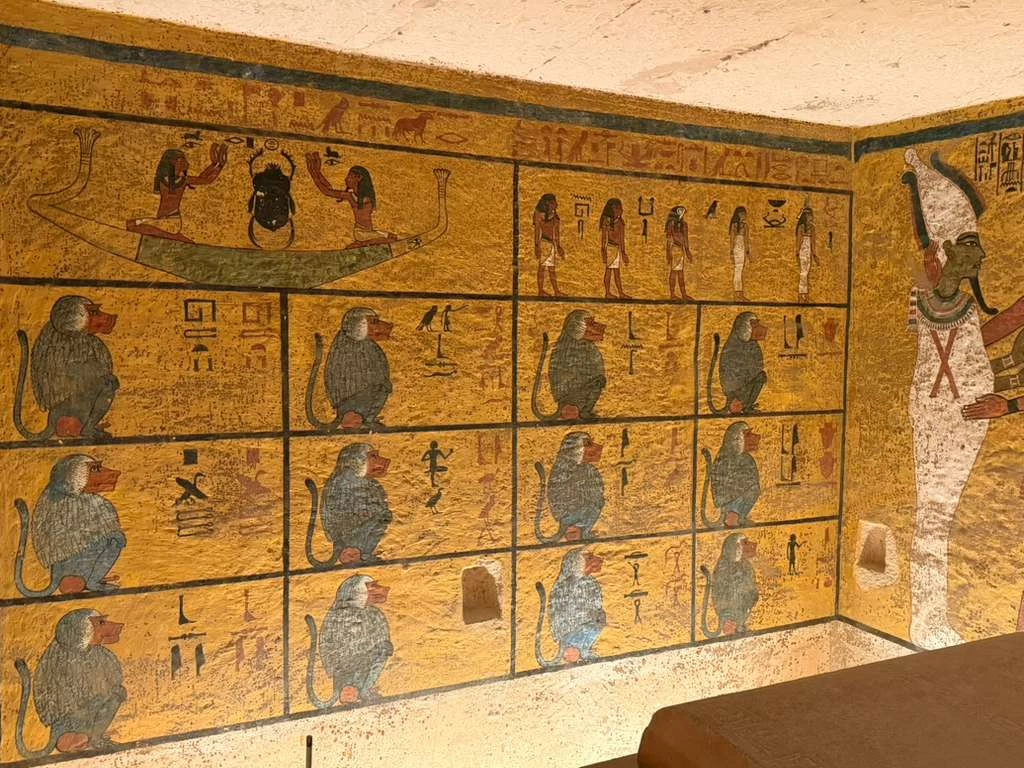
Historical Importance
The Valley of the Kings was chosen as a royal cemetery because of its hidden location, desert environment, and dramatic cliffs that offered natural protection. Unlike the earlier pyramid complexes, these tombs were carved deep into the limestone mountains to help protect royal burials from theft.
The valley became the burial place for many famous rulers including:
- Tutankhamun
- Seti I
- Ramesses II
- Ramesses III
- Thutmose III
- Amenhotep II
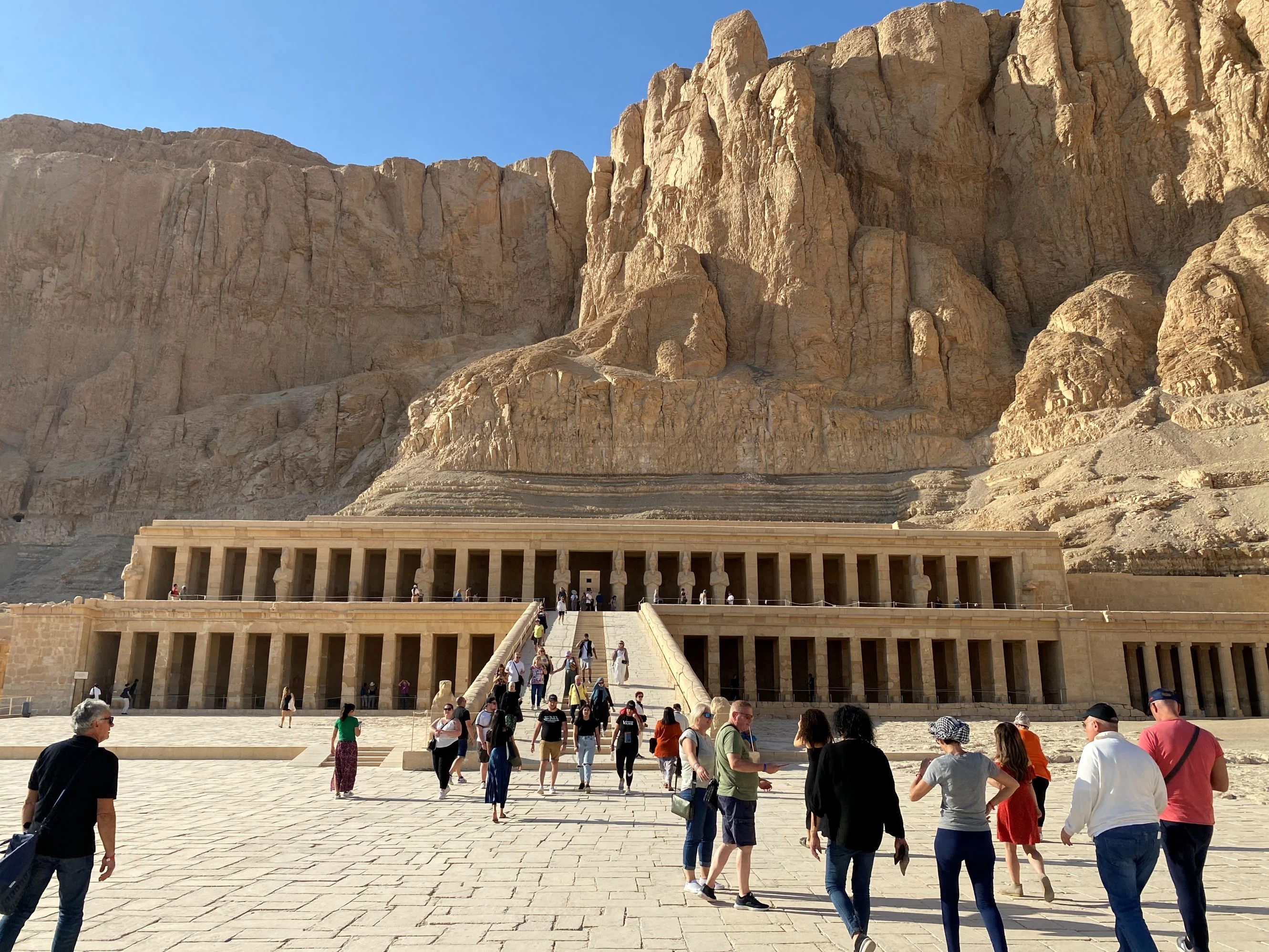
- Hatshpsut
- Yuya and Thuya
The most famous discovery in the valley is the tomb of King Tutankhamun, discovered in 1922 by British archaeologist Howard Carter. The tomb was found nearly intact and contained more than 5,000 objects, including golden treasures, furniture, jewelry, weapons, statues, and ceremonial items.
Many of these treasures are now displayed at the Grand Egyptian Museum (GEM) in Cairo.
Tomb Size and Design
Tombs in the Valley of the Kings vary significantly in size.
- The smallest tombs may cover approximately 60 square meters.
- The largest tombs can exceed 600 square meters.
- Some tombs extend deep underground with multiple corridors, halls, burial chambers, and storage rooms.
Each tomb followed a symbolic design linked to the king’s journey into the afterlife.
How Ancient Egyptians Built a Tomb
Building a royal tomb was a highly organized process that required careful planning, skilled labor, and religious supervision.
1. Royal Decision
The construction of a tomb began while the pharaoh was still alive. A decision was made by the royal administration on the east bank of the Nile, then transferred to the western necropolis, where burial work would begin.
2. Selecting the Team
A specialized workforce was chosen to build the tomb. This included:
- Architects
- Engineers
- Stonecutters
- Craftsmen
- Artists
- Sculptors
- Laborers
Workers lived in nearby villages such as Deir el-Medina, where many tomb builders resided.
The workforce was divided into smaller groups, often teams of approximately 10 workers, each supervised by a foreman.
3. Testing the Rock
Before excavation began, builders tested the quality of the limestone rock to ensure stability.
They looked for:
- Strong rock layers
- Minimal cracks
- Few flint deposits
- Limited fossil shells or weak surfaces
Choosing the correct location was essential to prevent collapse.
4. Cutting the Tomb
Workers carved corridors and rooms directly into the cliff using stone and copper tools.
The tomb layout depended on:
- The importance of the king
- Available time
- Religious traditions
- The king’s reign length
5. Smoothing the Walls
Once excavation was completed, cracks and rough surfaces were covered with plaster.
This helped:
- Strengthen weak areas
- Create smooth walls for decoration
- Prepare surfaces for painting and carving
6. Sketching the Decoration
Artists sketched scenes on the walls using grids to maintain correct body proportions.
The scenes often included:
- Religious texts
- Gods and goddesses
- The king’s journey to the afterlife
- Funerary rituals
- Protective spells
Corrections were made using colored ink before carving began.
7. Carving and Coloring
After the sketches were approved, sculptors carved reliefs into the walls and painters added final colors.
Three main decorative techniques were used:
- Raised Relief (High Relief) – Figures projected outward from the wall.
- Sunken Relief (Deep Relief) – Figures were carved into the wall surface.
- Painting Only – Decorative scenes applied directly to plaster.
8. Completion During the Pharaoh’s Lifetime
The tomb was ideally completed before the death of the king. Work continued throughout the ruler’s life and sometimes stopped suddenly if the king died unexpectedly.
9. Burial Ceremony
After death and mummification, the king’s body was placed inside the burial chamber.
The tomb was supplied with:
- Furniture
- Jewelry
- Food offerings
- Chariots
- Statues
- Religious items
- Treasure for the afterlife
The entrance was then sealed to protect the burial.
The Sacred Goddess of the Valley
The protective goddess associated with the Valley of the Kings was Meretseger, whose name means “She Who Loves Silence.”
Meretseger was believed to guard the sacred mountain overlooking the valley and protect the tomb builders and royal burials.
Visitor FAQs
Which Tombs Are Usually Open?
The selection of open tombs changes regularly for conservation purposes.
Generally, a standard entrance ticket allows access to three tombs from the regularly rotating list.
Frequently open tombs may include:
- Tomb of Ramesses IV (KV2)
- Tomb of Ramesses III (KV11)
- Tomb of Merenptah (KV8)
- Tomb of Tausert & Setnakht (KV14)
- Tomb of Ramesses IX (KV6)
- Ramesses I (kv 16)
The open tombs vary depending on restoration work and preservation conditions.
Which Tombs Require Extra Tickets?
Some tombs require separate tickets because of their popularity or conservation requirements.
Common extra-ticket tombs include:
- Tutankhamun Tomb (KV62)
- Seti I Tomb (KV17)
- Ramesses V & VI Tomb (KV9)
Approximate additional ticket costs may vary depending on nationality and updates by the Ministry of Tourism and Antiquities.you need to check the last update for the pricing.
Opening Hours
The Valley of the Kings is generally open daily.
Typical opening hours:
- Opening: 6:00 AM
- Closing: 5:00 PM
- Last entry is usually about one hour before closing.
Hours may vary during holidays or special seasons.
Best Time to Visit
The best time to visit is:
- Early morning (6:00–9:00 AM)
- Late afternoon during cooler seasons
Visiting early helps avoid:
- Strong heat
- Large crowds
- Long queues
Is the Site Suitable for Handicapped Visitors?
The Valley of the Kings can be challenging for visitors with mobility limitations because:
- Terrain is uneven
- Paths include gravel and slopes
- Tomb entrances may require stairs or ramps
- Some tombs have steep descents underground
However:
- Electric shuttle trains operate between the visitor center and tomb entrance area.
- Some sections are easier to access than others.
- Wheelchair assistance may be possible in limited areas.
How Many Tombs Can Be Covered During One Visit?
A typical visit lasts between 2–3 hours.
Most visitors can comfortably explore:
- 3 included tombs
- 1–2 extra ticket tombs if desired
A dedicated history enthusiast or guided tour may cover more, depending on pace and crowd levels.
Visitor Tips
- Wear comfortable walking shoes.
- Carry water, especially in summer.
- Photography rules may vary by tomb.
- Avoid touching wall paintings to preserve the artwork.
- Consider visiting with a guide to understand tomb symbolism and historical context.
- Bring a card for additional tickets, no cash accepted
The Valley of the Kings remains one of Egypt’s most extraordinary archaeological treasures, offering a rare look into royal burial traditions, ancient engineering, and beliefs about the afterlife.


.svg)