Deir el-Medina

Deir el-Medina is one of the most important archaeological sites in Egypt for understanding daily life in the New Kingdom. It dates back to the 18th Dynasty of the New Kingdom, most likely established in the early phase of royal tomb construction in the Valley of the Kings, possibly during the reign of Thutmose I and later expanded by successive pharaohs.
Importance of the Site

Deir el-Medina is extremely important because:

  • It is one of the few preserved ancient Egyptian workers’ villages
  • It provides a unique and detailed picture of daily life in ancient Egypt
  • It preserves houses, tombs, and thousands of written records

The site tells the full story of how royal tombs were built, decorated, and maintained in the West Bank of Luxor.

Why was it built?

The village was created to house the skilled workers, craftsmen, artists, and engineers who built and decorated the royal tombs in the nearby Valley of the Kings.

It was designed to:

  • Reduce travel time to the royal necropolis
  • Keep workers close to their construction projects
  • Ensure efficiency and secrecy of royal tomb building

Over time, the settlement expanded as the number of workers increased.

Discovery of the “Great Pit”

In the late 1940s (1949–1951), French archaeologist Bernard Bruyère accidentally discovered a large refuse pit in the area. This discovery is often called the “Great Pit”.

It contained thousands of ostraca (pottery and limestone fragments with writing), including:

  • Workers’ letters
  • Administrative records
  • Personal complaints
  • Religious texts
  • Sketches and drawings
  • Daily work schedules

These documents are one of the most important sources for understanding ancient Egyptian daily life.

Tombs of Deir el-Medina

The tombs of the workers and artisans are different from royal tombs:

  • Much smaller in size
  • Often include a small pyramid-shaped chapel above the entrance
  • A vertical shaft leading to burial chambers
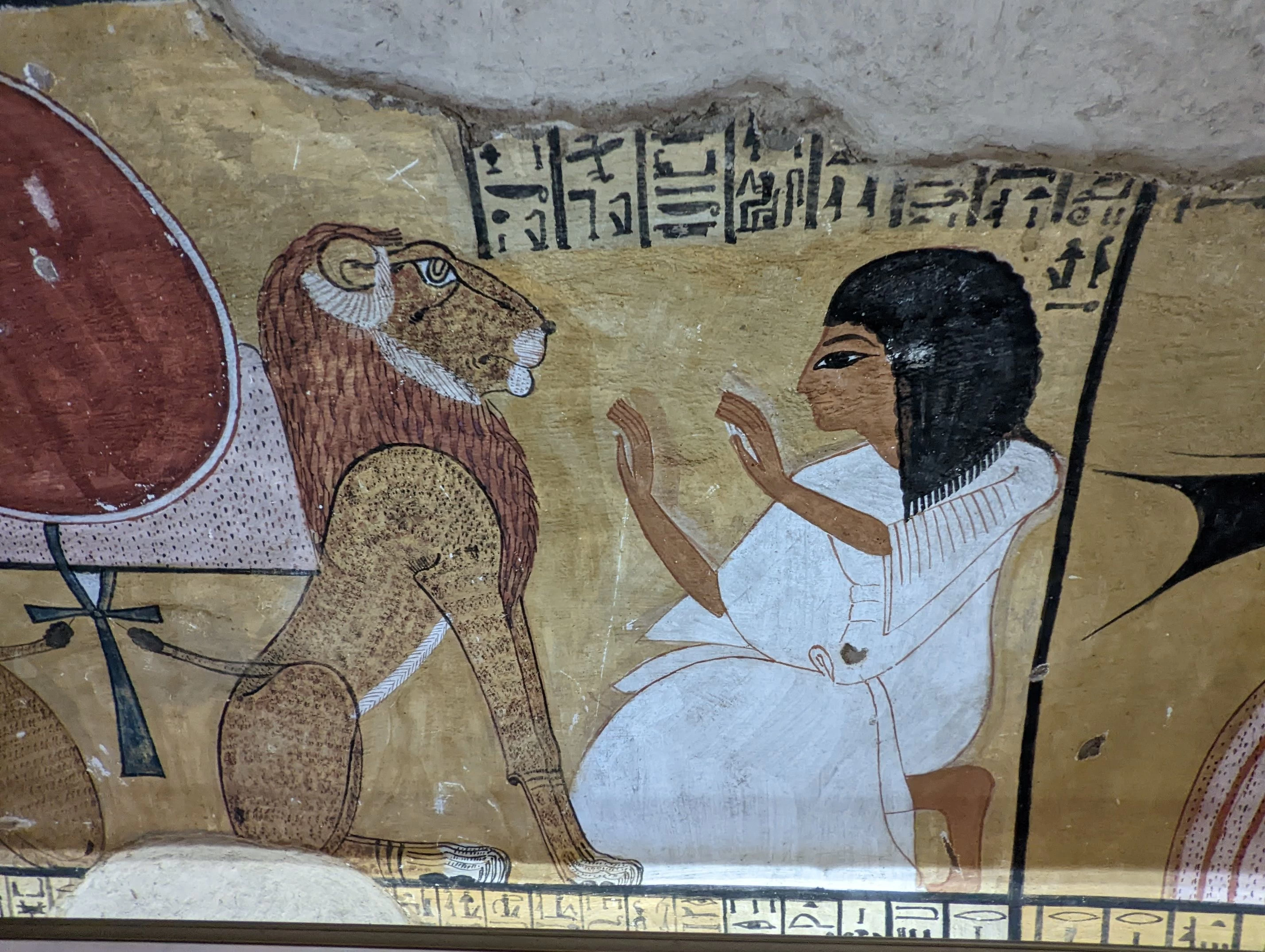
  • Beautifully decorated walls

The scenes often show:

  • Religious texts and afterlife journeys
  • Daily life scenes of the workers
  • Family portraits and personal beliefs

One of the most famous tombs is the tomb of Sennedjem and his family (TT1), which was discovered intact and is now represented in museums such as the National Museum of Egyptian Civilization (NMEC).

Name of the Site

The modern name “Deir el-Medina” comes from a later period when a Coptic Christian monastery (“Deir” meaning monastery) was built in the area during the early Christian era.

Later Discoveries

In modern times, Egyptian archaeologists led by Dr. Zahi Hawass discovered what is known as the “Lost Golden City” near Luxor, which is a large settlement related to the same broader Theban area. It included houses, workshops, tools, and thousands of artifacts that helped expand our understanding of urban life in ancient Egypt.

Houses in the Village

The houses in Deir el-Medina were:

  • Small and closely packed
  • Built mainly from mudbrick
  • Often 1–2 floors

Typical layout included:

  • Entrance hall
  • Living room
  • Storage area
  • Kitchen
  • Sleeping rooms

Some homes used rooftops for:

  • Sleeping in summer
  • Storage
  • Daily activities

Summary

Deir el-Medina is not just a workers’ village — it is one of the richest archaeological archives in the world, preserving the lives of the people who built the eternal tombs of Egypt’s kings.
Related articles

Discover more tips, guides and insights to plan your perfect trip.

Things to do in Luxor
  • Apr 15, 2026

Karnak Temple

The largest temple ever built

Read more right_arrow
Things to do in Luxor
  • Apr 15, 2026

Kom Ombo Temple

A unique dual temple of the Greco-Roman era

Read more right_arrow
Things to do in Luxor
  • Apr 15, 2026

Luxor

The city of the gods - and the city of the dead

Read more right_arrow
Things to do in Luxor
  • Apr 15, 2026

Luxor Temple

City sights, ancient delights

Read more right_arrow
Things to do in Luxor
  • Apr 15, 2026

Medinet Habu

Mortuary temple of Ramesses III

Read more right_arrow
Things to do in Luxor
  • May 09, 2026

Valley of the Kings

One of the most important archaeological sites in Egypt.

Read more right_arrow
Things to do in Luxor
  • May 09, 2026

Colossi of Memnon

Some of the most famous surviving monuments from the New Kingdom.

Read more right_arrow
Things to do in Luxor
  • May 09, 2026

Tombs of the Nobles (West Bank of Luxor)

Learn about the daily life of the ancient Egyptians

Read more right_arrow
Things to do in Luxor
  • May 09, 2026

Luxor Museum

One of the most elegant and carefully curated museums in Egypt

Read more right_arrow
FAQ

Check our Frequently Asked Questions

Find quick answers to the most common questions about your trip. Our FAQ section covers everything from travel requirements and safety tips to local customs and currency information. Interested to know more? Contact Us

What's an Egyptologist Guide?

Licensed tour guides must maintain a certification from the Egyptian Ministry of Tourism and Antiquities, along with membership in the Egyptian General Tourist Guide Syndicate. These certifications ensure that our guides are fully approved and registered as professionals with the Egyptian government authorities.

When is the best time to visit Egypt?

The busiest tourist season is from September to April. The weather in Egypt is generally sunny and dry, with lower temperatures in the winter months that make for pleasant travel through Upper Egypt.

How much is expected in gratuities?

Tipping is greatly appreciated, based on the quality of the service you receive. We suggest around $5-$8 per day for your driver, and $10-$15 per day for guides. Tipping can be done in cash, either as Egyptian pounds, US dollars or Euros. For non-Egyptian currency, bills in good condition (no rips or tears) are preferred.

How do I get an Egypt entry visa?

You can get a 30-day tourist visa upon arriving at Cairo Airport. Please bring $25 in USD cash with you; you will get the visa documentation before the immigration desk at the airport, and the immigration officials will review and stamp your passport. Our staff will meet you after you disembark the plane to facilitate this process and ensure you are able to get through security smoothly.

How much walking will be involved in our tour?

Most tours can be walking-intensive, primarily on flat ground. Visiting the Pyramids and the Sphinx requires some walking over flat but uneven ground and sand. Entry into many of the tombs and Pyramids can be physically demanding, with low ceilings, steep staircases and narrow passageways.

How long will each day be?

Each day’s tour is a full day, estimating 8 to 10 hours - though we have built in plenty of time to rest, enjoy a coffee or a meal, or explore on your own. 


What should I wear?

Comfortable, closed-toe walking or athletic shoes are recommended as there may be areas with uneven pavement. Locals in Egypt often dress modestly, so visitors often feel more comfortable in clothes that cover their shoulders and knees (t-shirts or long sleeved shirts, capris, pants). You may wish to bring a hat for sun protection, as well as a scarf or light jacket for evening.


whatsapp-icon phone_call